Our
Response
The PITAC review stresses both the need to sustain federal investment
in information technology research and the need to rethink priorities
and management in ways that reflect new opportunities. Flexibility
is essential in this rapidly changing field. If the past decade is
a guide, the most important advances will come from utterly unexpected
directions.
Several features of an information-rich future do seem apparent.
If there is a single theme, it is that as the power of information
devices increase, they become both easier to use and less visible.
We've moved from a world where computers were run by what seemed
like high priests in glass-enclosed rooms to a world where powerful
information devices are operated by our kids at home and others
are hidden in the control systems of cars, tools, and a host of
other devices we use at home and at work. Our goal in a research
program should be to balance investments needed to continue technical
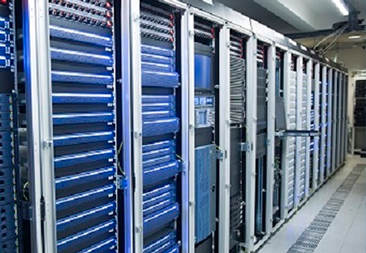
progress in the extremely powerful machines needed to tackle major
scientific and engineering problems, with the investments needed
to ensure faster and more powerful communication networks, and to
undertake the basic work needed to design and operate reliable systems
that can serve the practical needs of all Americans. The new tools
should let people think about the issues they care aboutwhether
its editing a musical score or designing a bridge or reviewing treatment
opportunities with a patientand not be forced to translate
their interests into an obscure language spoken only by computers.
A few features of such systems are becoming clear:
Computing power will be located in many different sites and linked
in ways that provide different levels of power as required. Applications
can choose to exploit processing located in many different parts
of a wide network or use the processing power of large central nodes.
These selections will be as transparent to the users as the location
of information servers are to users of web browsers.
Each of us will be supported by hundreds if not thousands of individual
processors, most providing anonymous services as components of manufacturing
equipment, automobiles, medical sensors, and many others.
Most of these information processors will be linked with each other
with powerful, flexible communication networks. Access to these
networks will not require physical connection; high-speed links
will be available through secure wireless connections.
These systems will provide people with the information they want
when they want it, where they want it, and in a form best suited
to the occasion. A simple question can trigger a worldwide search
through medical publicationsin all languagesyielding
a clear, useful answer in the form of text, images, or other forms.
Enormous, complex bodies of information about economic data, weather
simulations, gene functions and other areas will be presented using
visual and other tools designed to present them in a form best matched
to human capacity for understanding. Teams physically far apart
can work closely in shared information spaces.
Powerful computer simulations will provide essential tools for
design and testing of products and equipment (including design of
products tailored for individual needs and tastes), new tools for
research in fields ranging from climate change to pharmaceutical
design to analysis of the formation of stars and galaxies.
The complex software supporting these extraordinary capabilities
will be designed, tested, repaired and maintained with the same
confidence that we now design complex equipment like aircraft and
bridges. Faults will be predicted and undetected errors will not
lead to catastrophic failures but to a minor degradation of performance
while the problems are repaired.
Outlines of a Research Plan
PITAC was clear that they wanted strong continued support for fundamental
research in topics like software development, the ability of humans
to make practical use of emerging information systems, and the ethical,
social, and other impacts of changes in our society being caused
by the information revolution. Their core argument is that research
in information science must itself become an essential part of our
research base and should be treated as an independent discipline
instead of an adjunct to other research. We are carefully considering
options for addressing this important issue. Clearly it is essential
to strengthen the bonds linking research in information sciences
with investigators who need these tools to advance missions in defense,
space research, weather modeling, and scientific research. But it
is also important that we give information sciences adequate priority
in its own right as we make tough budget decisions about R&D
priorities. We are reviewing research options aimed at:
 |
developing new methods for designing and testing
software and software maintenance that can ensure reliability
and security as well as methods to increase the productivity
of software creation; |
 |
finding better ways to master the avalanche of
information flowing through our lives which requires better
ways to analyze and abstract information available in text,
images, and other formats; |
 |
inventing flexible, reliable information networks
that will link machines and millions if not billions of separate
processorssome operated directly by humans but most integrated
into products or even autonomous systems; |
 |
ensuring continued advances in the power of high
speed computers and that US firms retain world leadership in
this critical area; and |
 |
understanding the ethical, economic, social, and
other issues we are confronting as information technology transforms
the nature of work in America and reshapes virtually every business
and public service. |
If we are to achieve these goals it is essential that we find new
ways to link research teams that require powerful computation and
communication services with the tools and the expertise they need.
Research in protein chemistry, astrophysics, climate modeling, engineering
simulations, economic modeling and many others depends on access
to world-class machines.
Next Steps
During the coming months, I will be working closely with federal
agencies, members of the PITAC, and other experts to forge a plan
which the President can present to you next spring. I hope that
we will be able to work with members of this Committee in developing
these plans. There can be little doubt that fundamental research
in information technology is critical for America's welfare, security,
and prosperity in the 21st century. It's influence will clearly
be as great as the agricultural technologies that ended up moving
most Americans off the farm early in this century, and the technologies
of electricity, the telephone and the internal combustion engine.
Research in information technology clearly deserves a major place
in our national research portfolio. The PITAC argued strongly that
simple expansion of what we are already doing is unlikely to be
the right answer and we are reviewing a range of proposals. The
research problems faced in information technology are unique and
deserve fresh ideas about how to address them. We have learned a
lot about what does and doesn't work in the management of research
over the past decades and its essential that we draw on what we
have learned in designing new approaches for information technology
research. It is important that our research:
 |
ensure support for basic, high risk areas and
encourage a search for the unexpected; |
 |
encourage partnerships linking many academic disciplines
and research teams drawing on the best minds in industry and
universities; |
 |
the process for selecting priorities and projects
should be open, competitive, and reviewed by peers; |
 |
attract participation from all parts of the country;
and |
 |
integrate research goals with the goal of providing
education and training. |
Americans expect the federal government to take a leadership role
in supporting fundamental research in areas critical to our future.
The PITAC has presented us with a range of important challenges.
I look forward to working with members of this Committee in the
coming months in shaping an effective response.
Neal F. Lane
Assistant to the President for Science and Technology
and
Director, Office of Science and Technology Policy
On August 4, 1998, Neal F. Lane was sworn in as Director of the
Office of Science and Technology Policy. Dr. Lane also serves as
Assistant to the President for Science and Technology, often referred
to simply as the Presidents Science Advisor.
Immediately prior to his move to the White House, Dr. Lane served
as Director of the National Science Foundation from October of 1993,
during which time he also served as a member of the National Science
Board.
Prior to becoming NSF Director, Dr. Lane was Provost and Professor
of Physics at Rice University in Houston, Texas, a position he had
held since 1986. His tenure at Rice began in 1966, when he joined
the Department of Physics as an assistant professor. In 1972, he
became Professor of Physics and Space Physics and Astronomy. He
left Rice from mid-1984 to 1986 to serve as Chancellor of the University
of Colorado at Colorado Springs. In addition, while on leave from
Rice from 1979 to 1980, he worked for the National Science Foundation
as the Director of the Division of Physics.
Widely recognized as a scientist and educator, Dr. Lane has published
widely on research topics in atomic and molecular physics and has
made numerous presentations on science and science policy. Early
in his career he received an NSF Post-doctoral Fellowship and an
Alfred P. Sloan Foundation Fellowship. He earned Phi Beta Kappa
honors in 1960 and was inducted into Sigma Xi National Research
Society in 1964, serving as its president in 1993. While a professor
at Rice, he was a two-time recipient of the Universitys George
R. Brown Prize for Superior Teaching. Dr. Lane has also received
honorary degrees from several institutions of higher education.
Through his work with scientific and professional organizations
and his participation on review and advisory committees for various
Federal and state agencies. Dr. Lane has contributed to public service
throughout his career. He is a fellow of the American Physical Society,
the American Academy of Arts and Sciences, the American Association
for Advancement of Science and a member of the American Association
of Physics Teachers.
Born in Oklahoma City in 1938, Dr. Lane earned his B.S., M.S.,
and Ph.D. degrees in physics from the University of Oklahoma. He
is married to Jone Sue (Williams) Lane, has two children Christy
Saydjari and John and two grandchildren Alex and Allia Saydjari.
|