
CLOUD COMPUTING SPEAKER SERIES (FEBRUARY – MAY 2021)
Between February and May 2021 the Middleware and Grid Interagency Coordination Team (MAGIC) conducted a series of public meetings to examine cloud computing…


Official websites use .gov
A .gov website belongs to an official government organization in the United States.

Secure .gov websites use HTTPS
A lock ( ) or https:// means you've safely connected to the .gov website. Share sensitive information only on official, secure websites.
Between February and May 2021 the Middleware and Grid Interagency Coordination Team (MAGIC) conducted a series of public meetings to examine cloud computing…

The advanced computing ecosystem plays an essential role across all of science and engineering (S&E), catalyzing discoveries and innovations, advancing economic competitiveness, and ensuring security. Recognizing this critical role and …
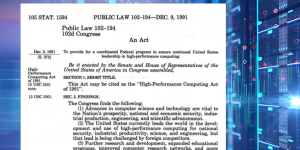
Federal research and development (R&D) investment in emerging technologies is critical to promoting and protecting American innovation and international science and technology (S&T) leadership. The Networking and Information Technology R&D (NITRD) Program focuses its work on strategic R&D imperatives that lead to cutting-edge technologies and strengthens competitiveness. The NITRD Program was launched as the High-Performance Computing and Communication Program by the High-Performance Computing (HPC) Act of 1991 and reauthorized by Congress in the American Innovation and Competitiveness Act of 2017.
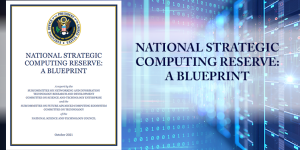
This report outlines a Federal proposal for setting up a National Strategic Computing Reserve (NSCR) that can be called on in times of national crisis to rapidly activate a multisector advanced computing reserve infrastructure that can speed solutions, and it defines a blueprint for operational and coordination structures that will support an NSCR implementation…
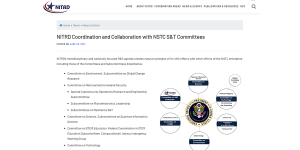
NITRD’s interdisciplinary and nationally focused R&D agenda creates natural synergies of its IWG efforts with other efforts of the NSTC enterprise, including those of the Committees and Subcommittees listed below: …
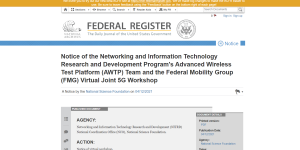
The NITRD Advanced Wireless Test Platform (AWTP) Team and Federal Mobility Group (FMG) Joint 5G Workshop will consist of two half-day sessions with a focus on advancing the FMG work product – Framework to Conduct 5G Testing – by exploring its applicability to specific 5G inspired use cases.

Government sponsored internships and training programs are competitive, and oh so exciting! What makes these training experiences so rewarding is that students actually get to work in STEM fields of interest – in other words, be a real scientist or engineer while also helping the nation, the planet, and the universe! This STEM Portal provides programs targeted to all levels of experience so there is something for everyone interested in technology careers and advanced training.

The December newsletter includes many interesting areas for you to explore: * SNIPPETS: These are short descriptions with corresponding links to what NITRD’s Federal agency members are doing in scientific computing technologies, including work to help fight COVID-19, which is causing the global pandemic; * TOPIC OF THE DAY: We examine supercomputers and how they are tackling unique problems.
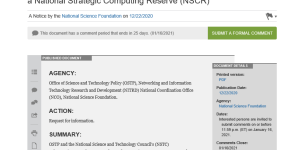
OSTP and the National Science and Technology Council’s (NSTC) Subcommittees on the Future Advanced Computing Ecosystem (FACE) and Networking and Information Technology Research and Development (NITRD) request input from interested parties on the goals, value, and necessary approaches for establishing a National Strategic Computing Reserve (NSCR).
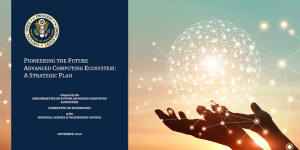
This strategic plan envisions a future advanced computing ecosystem that provides the foundation for continuing American leadership in science and engineering, economic competitiveness, and national security. It develops a whole-of-nation approach based on input from government, academia, nonprofits, and industry sectors, and builds on the objectives and recommendations of the “2019 National Strategic Computing Initiative Update: Pioneering the Future of Computing”.